Vezom tragova
- Year
- 2025
- Medium
- thread, digital print / fabric
- Dimensions
- dimensions variable
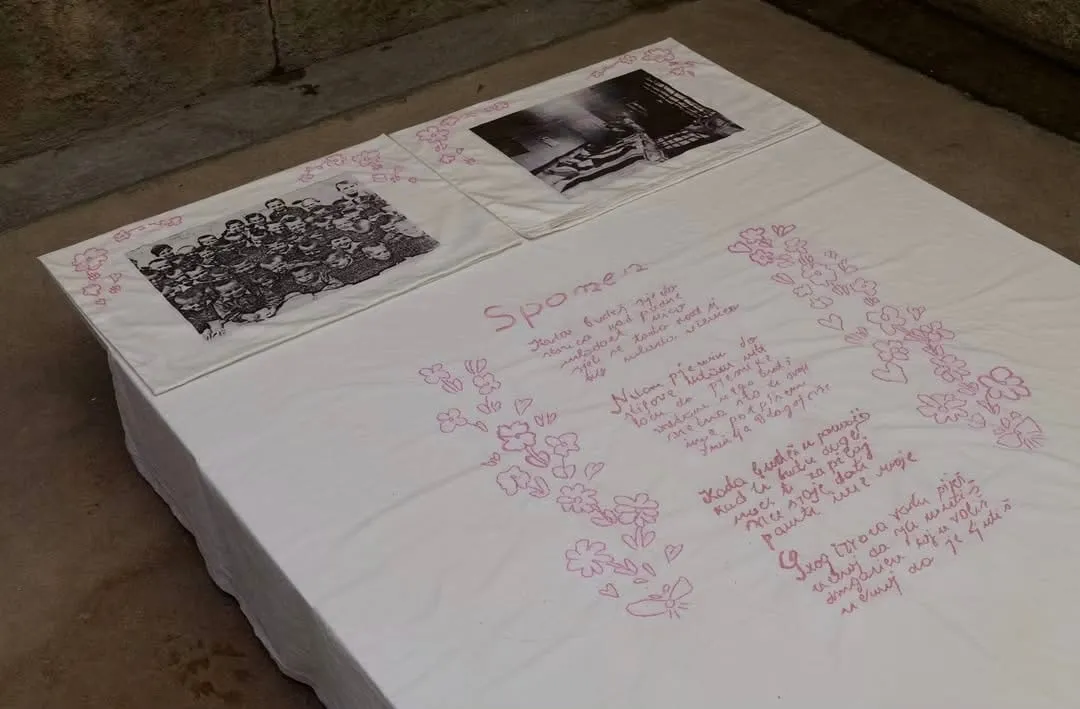
Installation view: the embroidered sheet and pillowcases printed with archival photographs. 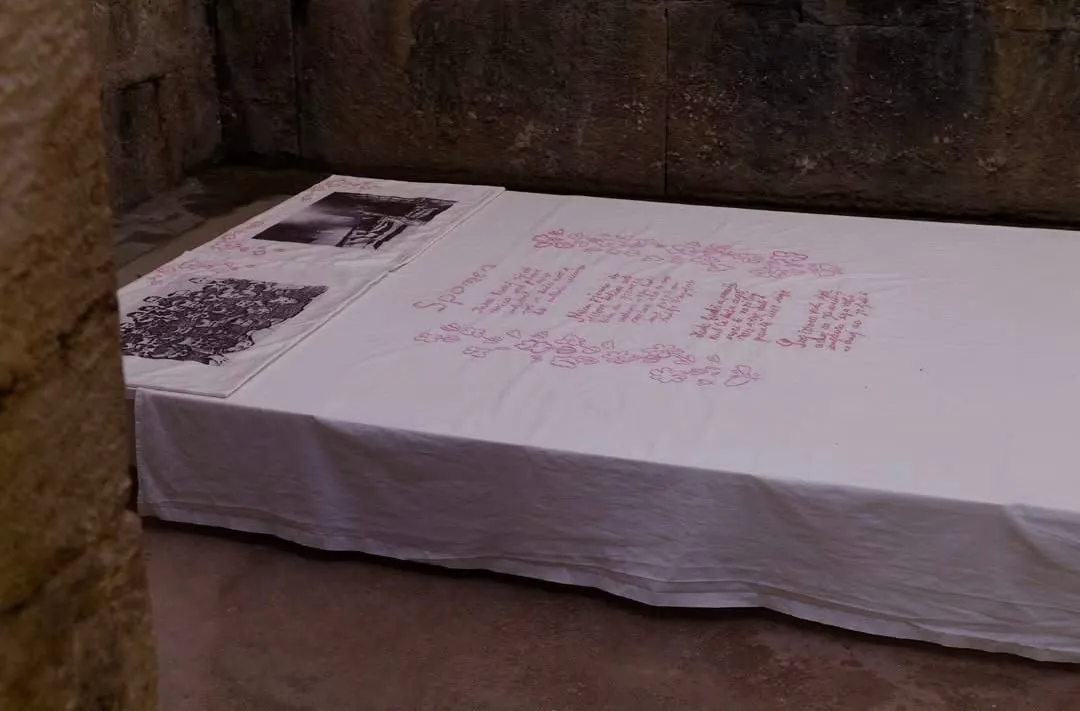
Installation view. 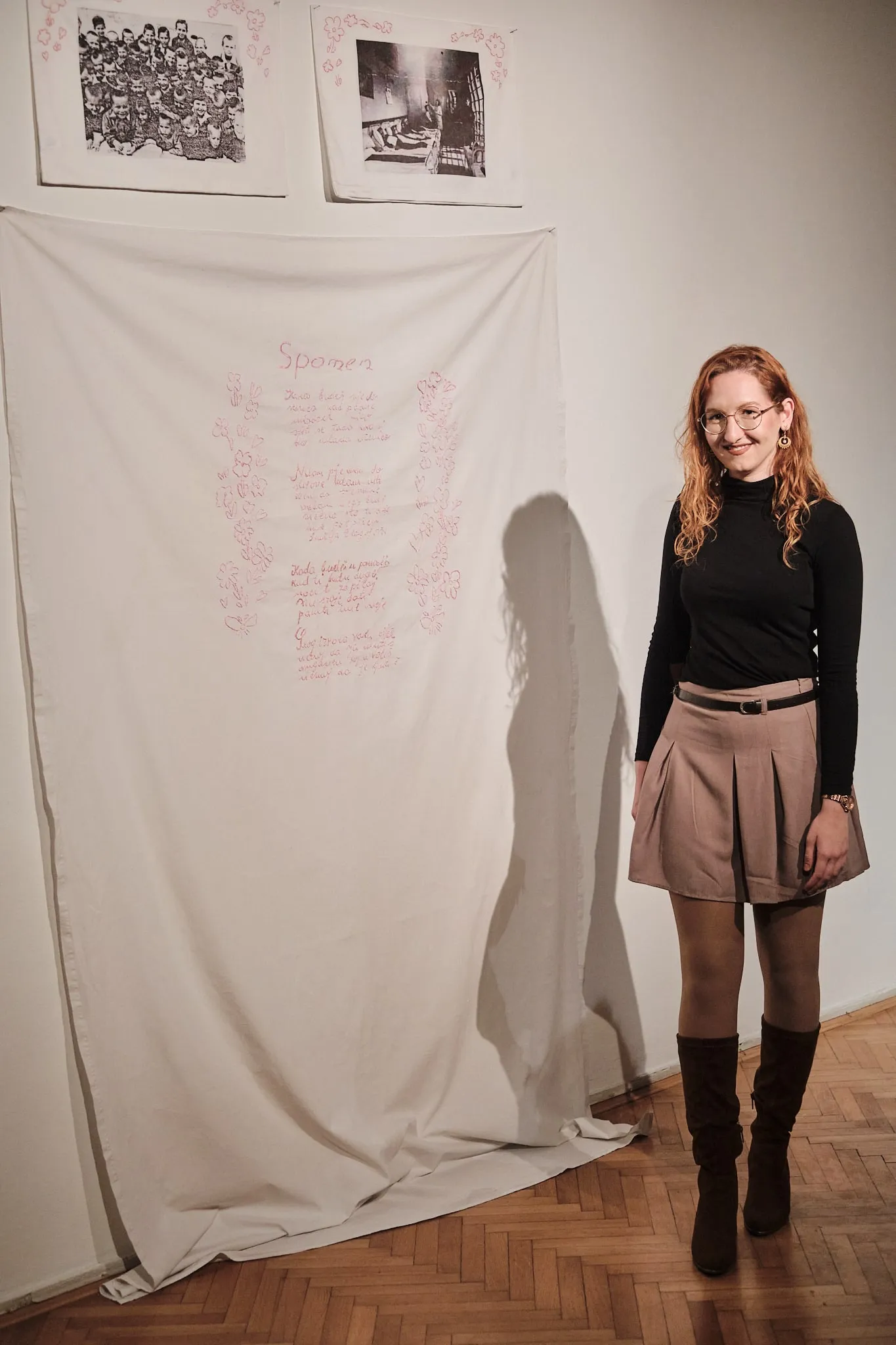
Jana Kujundžić beside the work. 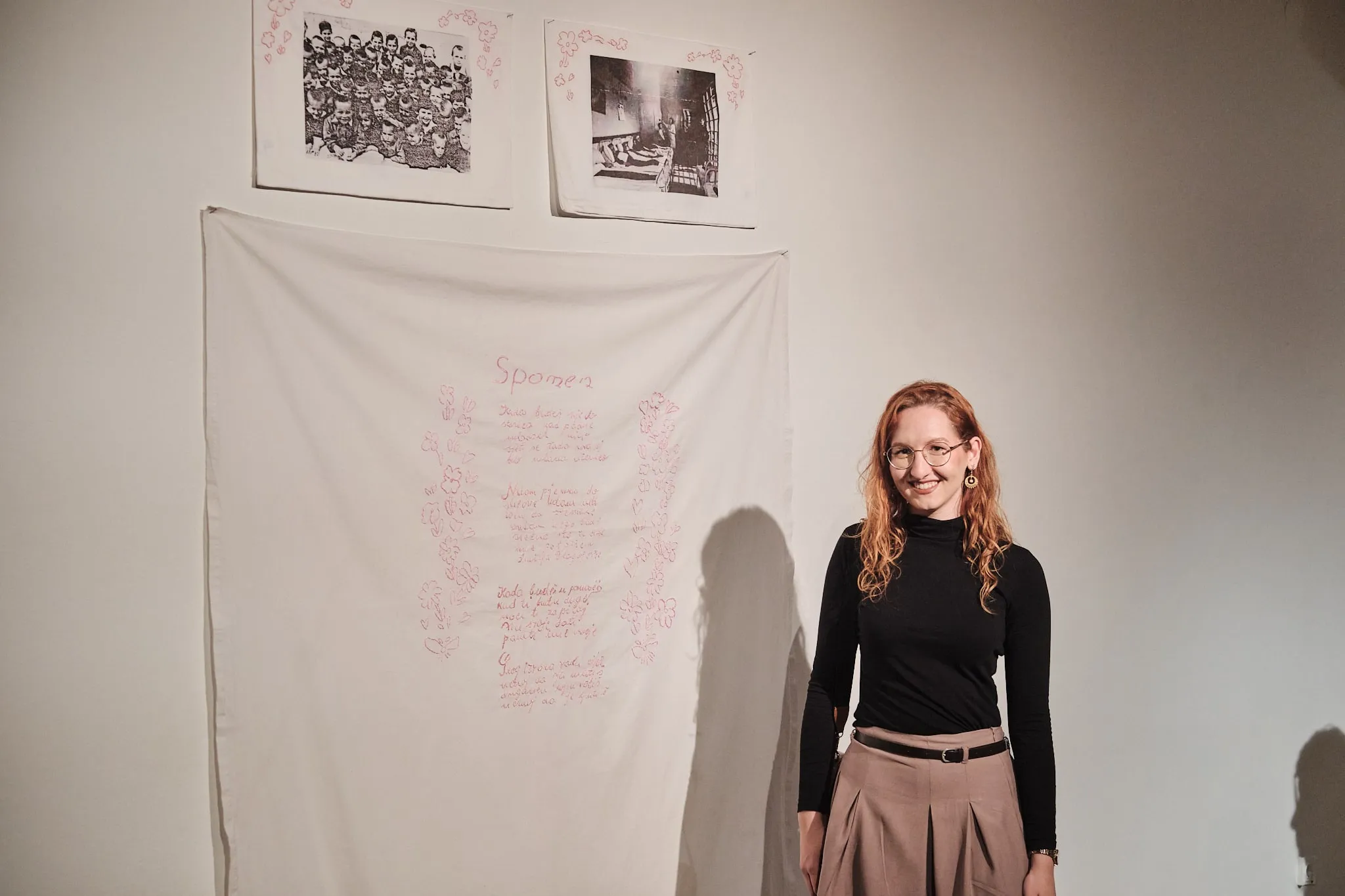
Jana Kujundžić beside the work. 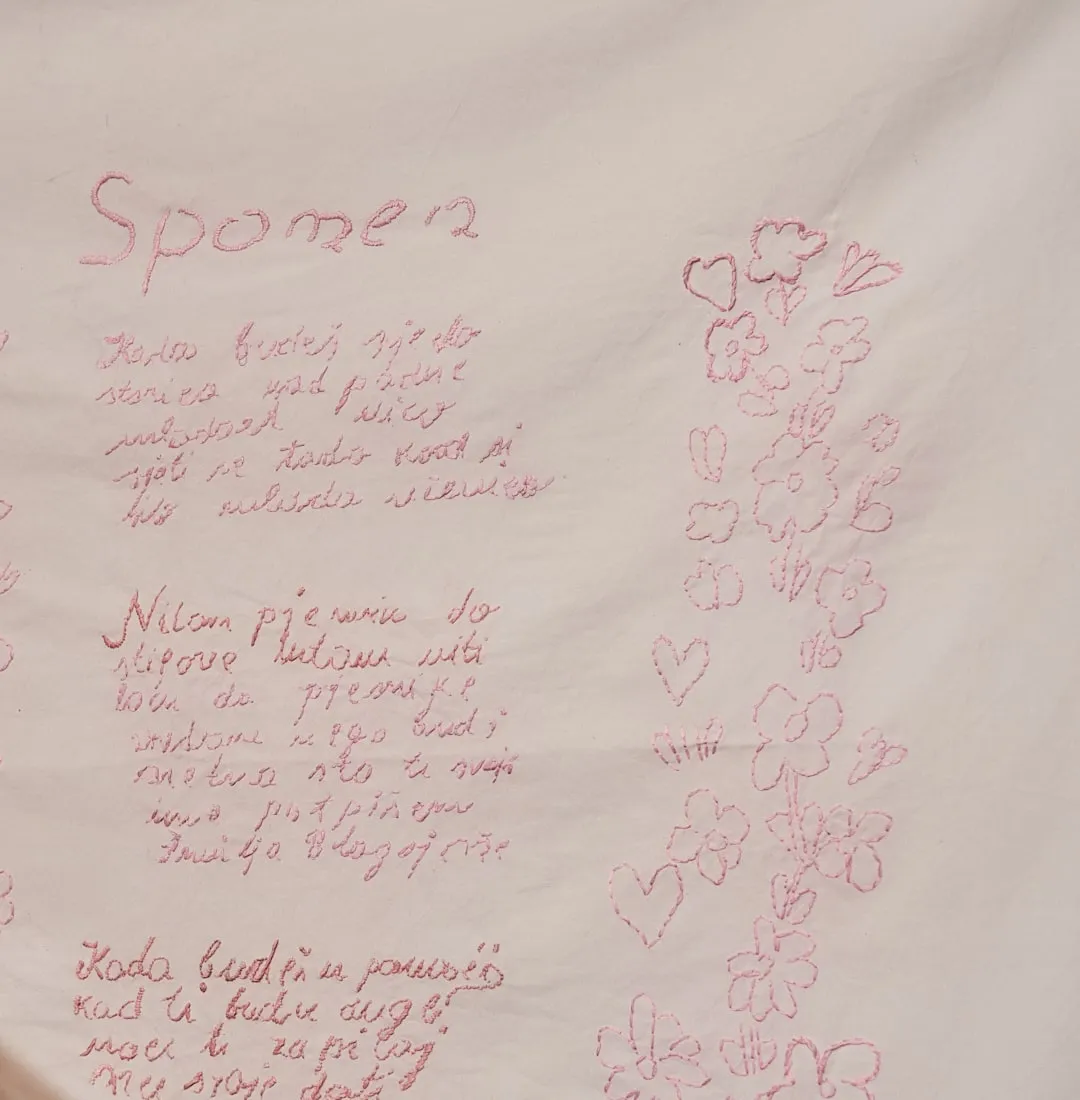
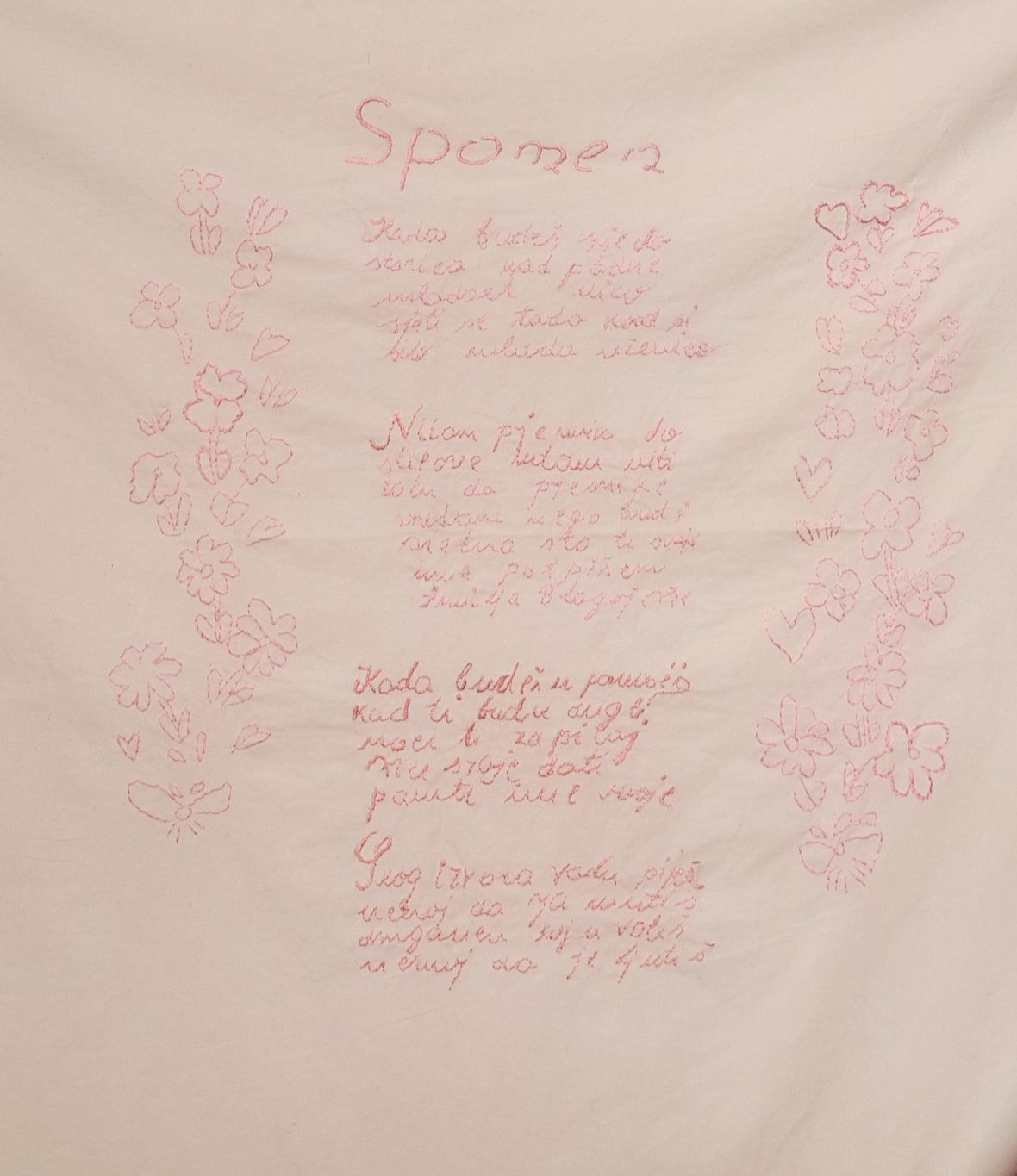
Detail: the poem from the diary, embroidered in the original handwriting.
About the work
A first encounter with a place is sometimes already marked by memory, as in the case of Cavtat, which appears as a place of inherited remembrance, not so much an immediate experience as a layered construction of memory, whose history is also written in the artist’s family stories. The work begins with a journey to Cavtat, the small town where the artist’s grandmother and her twin sister lived as children in a home for war orphans, a place that today exists only in fragments, and in memories that have survived in stories and are passed on as a form of mediated remembrance.
Archival materials such as notebooks and photographs, which the artist found over a long period of research, become part of the work. From one of these notebooks, a diary, she takes the text of a poem as a quiet note of an inner world and transfers it by hand embroidery, in the original handwriting, onto a bed sheet, while selected archival photographs are printed onto pillowcases. In this way the archive no longer functions only as a documentary source and becomes an affective and material carrier of memory. Embroidery, a practice coded as feminist and carrying strong symbolic value, was not chosen by chance. Embroidered bed linen, a sign of a parental dowry and of care, becomes in the context of the work a symbol and a quiet reminder of what was denied to these children. The symbolism can also be read in the pink thread, which stands for tenderness and a form of female care.
Through hand embroidery and textile, the artist at once evokes personal and family history and analytically questions the transmission of memory through material practices, seeking to make up, symbolically and reparatively, for the family love, care and sense of belonging that were denied, and to write a forgotten place back into the present, through personal and collective history.